Volcanoes, black and white sand beaches, charming villages and culture-rich cities. Tenerife has it all. There are many reasons to explore the sun-drenched Canary Island.
The guide to Tenerife is updated in January 2026
1 Climb Teide volcanoes
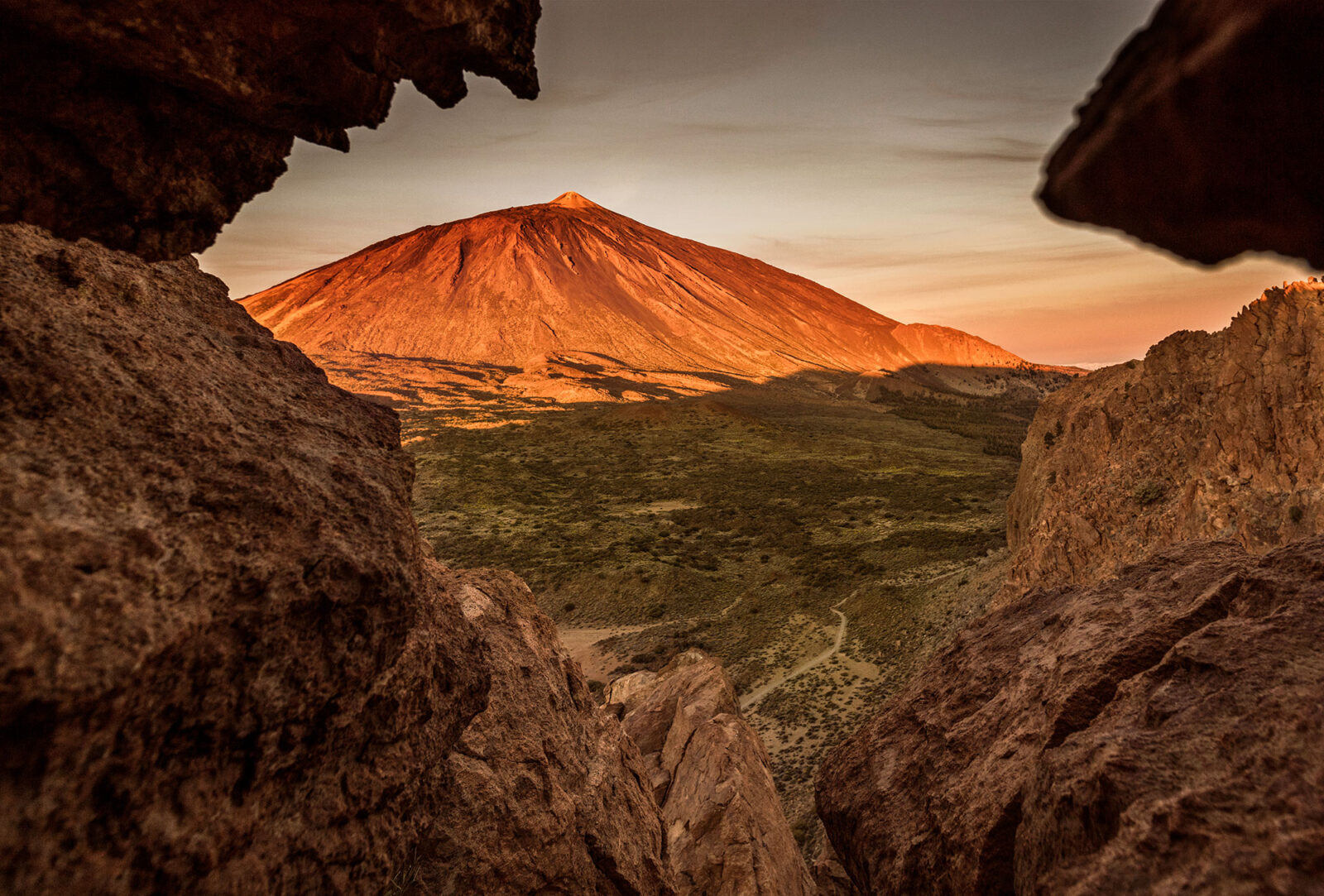
Tenerife has well over 200 volcanoes, the largest being Teide (3718 metres), whose peak you can spot almost anywhere on the island.
Teide is an active volcano taking a siesta, and at the top you can stick your hand into a fumarola, feel the heat and smell the harmless sulphur gases seeping out through the cracks.
The cable car that takes you to the top of Teide is located in Teide National Park. The drive there is exceptionally beautiful, passing through clouds and along pine and eucalyptus trees before reaching the park’s fascinating moonscape of rock formations.
The cable car takes you up 1199 metres in about eight minutes and drops you off at 3555 metres, where you’ll get spectacular views of the landscape and the Canary Islands. The cable car ride is great, but not for people with bad hearts and high blood pressure.
To get to the top of Teide, you have to walk along a path. The view is most impressive at sunrise and sunset, when the clouds change colour and the light reflects off the rocks. You can also hike up to Teide, but you’ll need to apply for permission through the Spanish national parks first.
Guided tours to Teide
Take a guided tour to Teide, driving through the national park and beautiful landscape and taking the cable car to the top of Teide. You’ll be picked up at a hotel in South Tenerife or by appointment. Book a guided tour to Teide here (promotional link)
 2 Opera in the capital Santa Cruz
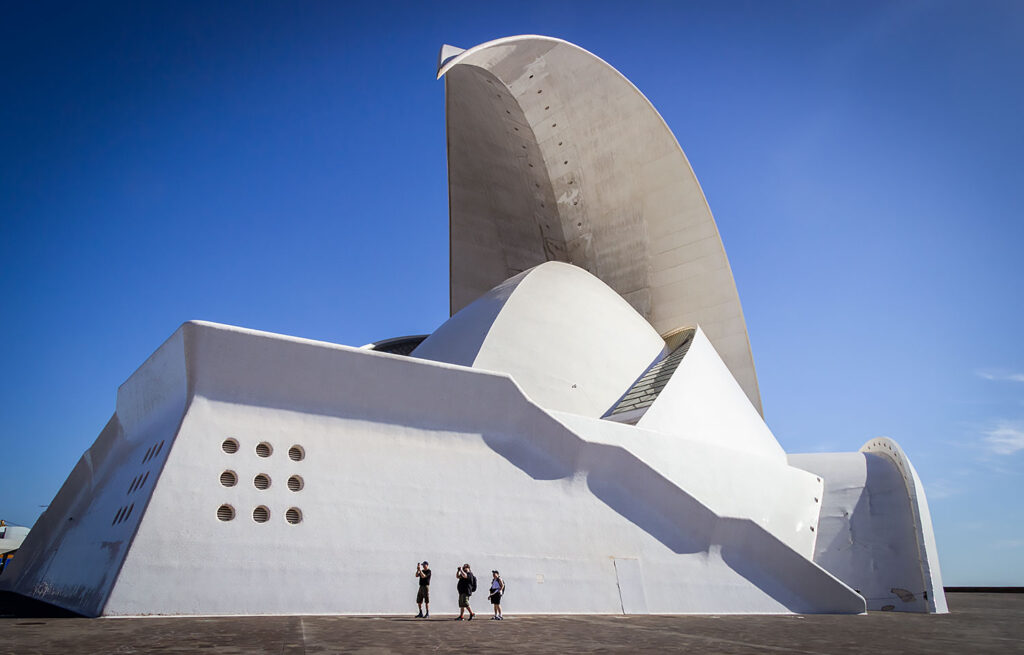
In Tenerife’s capital, Santa Cruz, a majestic white sculpture rises from the ground on the edge of the Atlantic Ocean. It is the city’s opera house, Auditorio de Tenerife Adán Martín. The expressionist building dates from 2003 and was designed by Spanish architect Santiago Calatrava.
Many compare Calatrava’s building in Santa Cruz to the Sydney Opera House. Inside, you can enjoy operas, jazz and rock concerts, big musicals and dance performances. Check the programme on the website. There is also a café and restaurant open all day where you can enjoy coffee and food with beautiful views of the architecture and the sea.
Auditorio de Tenerife, Av de la Constitucion 1
3 Street art with a sea of celebrities
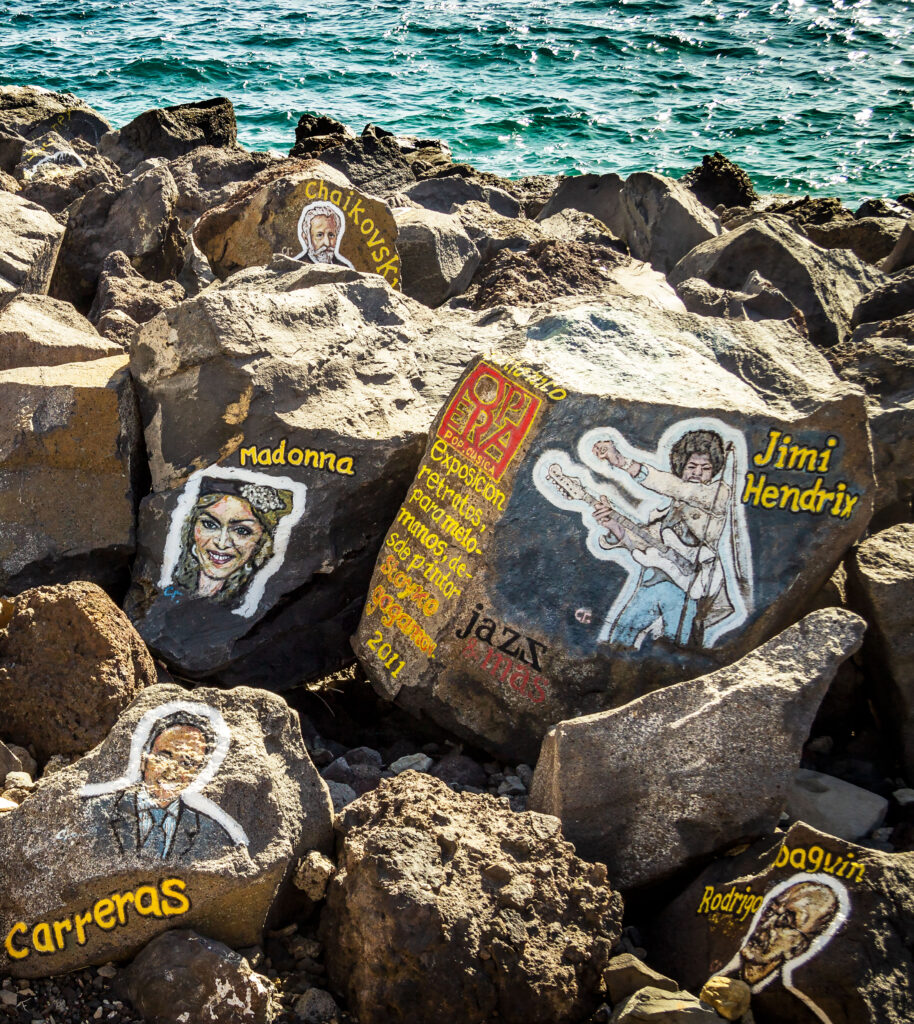
Look past the cliffs by the sea, next to the opera house in Santa Cruz, where locals sunbathe and fish. Here you can spot a host of music stars and other celebrities whose portraits are painted on the rocks.
The work Cien caras del Auditorio de Tenerife (100 faces of the Tenerife Auditorium) was created by Hungarian artist Stoyko Gagamov. You will find portraits of Madonna, Jimi Hendrix, Bob Dylan, Elvis Presley, Michael Jackson, Chaikovski and Vivaldi. Calatrava’s portrait also adorns a stone.
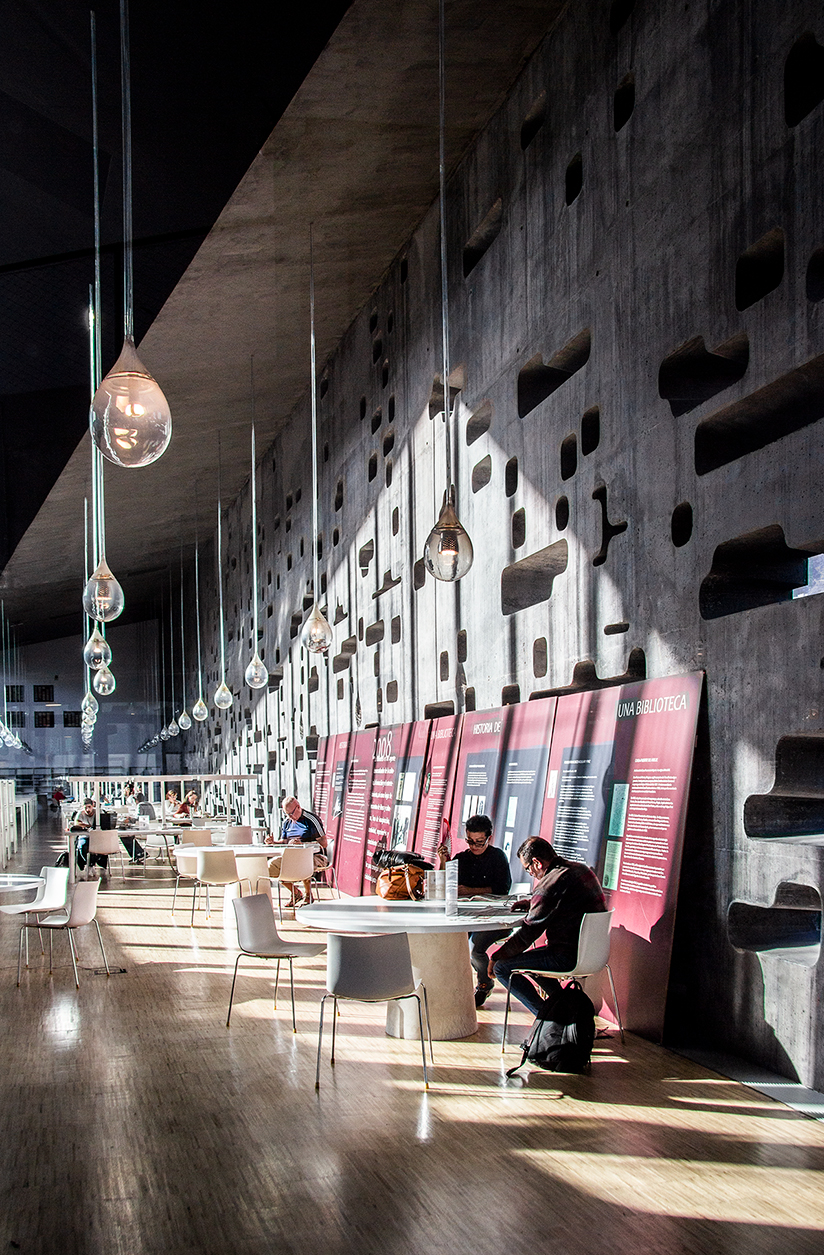
4 Cultural center in Santa Cruz
In the centre of Santa Cruz you’ll find the Tenerife Espacio de las Artes (TEA) cultural centre, which houses a modern art museum, Tenerife’s centre for photography and a large library. The building dates from 2008 and was designed by Swiss architects Herzog and de Meuron. It’s worth a visit in itself.
The museum has around 2000 works and you can see a collection by local surrealist artist Óscar Domínguez, a number of other Canarian artists and international photographers such as Man Ray.
Espacio de las Artes, Av. de San Sebastián 8
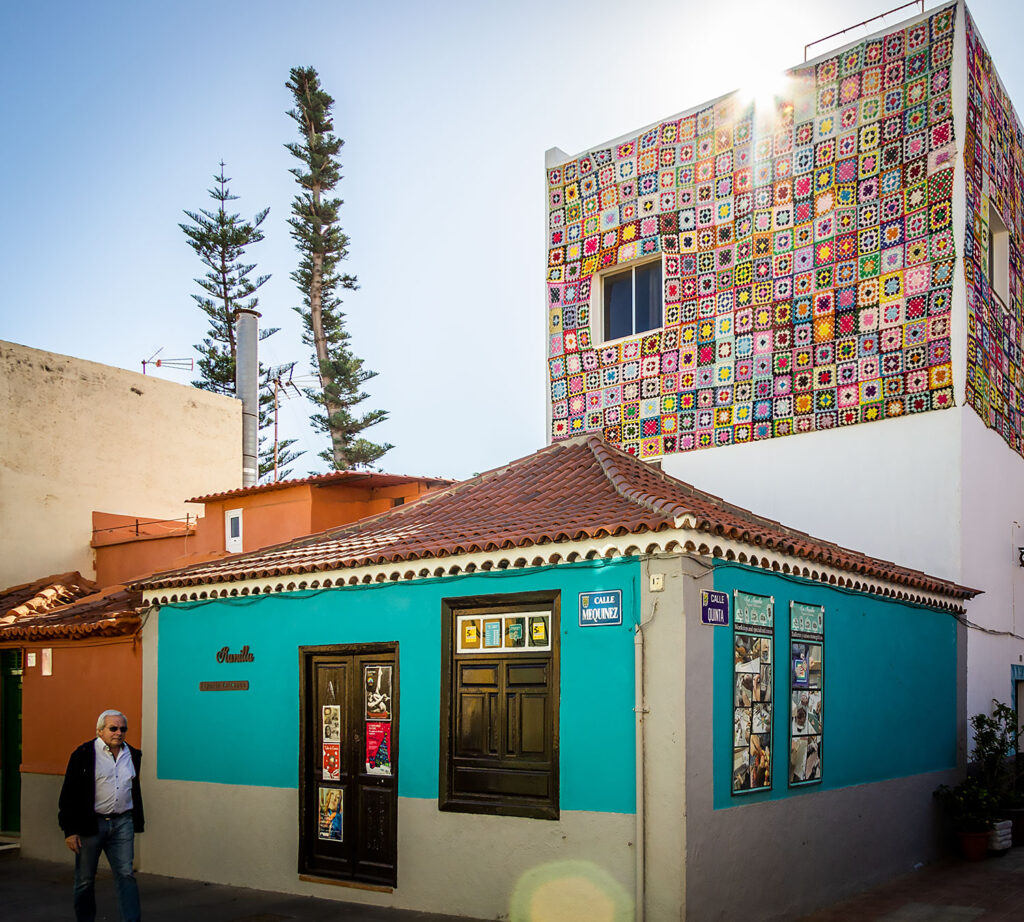
5 Street art in Puerto de la Cruz’s charming fishing district
Puerto de la Cruz is located on the north coast of Tenerife in the smallest district of the island (only 8.7 km²). The city is popular with tourists. Despite this, Puerto de la Cruz still has areas of local charm and culture. One of them is the old town, La Ranilla, a former fishing quarter that has preserved many of the old Canarian houses.
The neighbourhood attracts creative souls and each year hosts a street art festival, which has also transformed the neighbourhood into an outdoor art museum. Wander the streets and see how modern street art blends beautifully with the old, colourful houses. There are works by local and international artists, such as the Belgian ROA.
Don’t forget to look up and down and into corners and nooks, because street art is everywhere. From large gable paintings, to house fronts wrapped in crocheted blankets, to quirky little figures under windows. You’ll also find plenty of small craft shops and good restaurants in the neighbourhood.
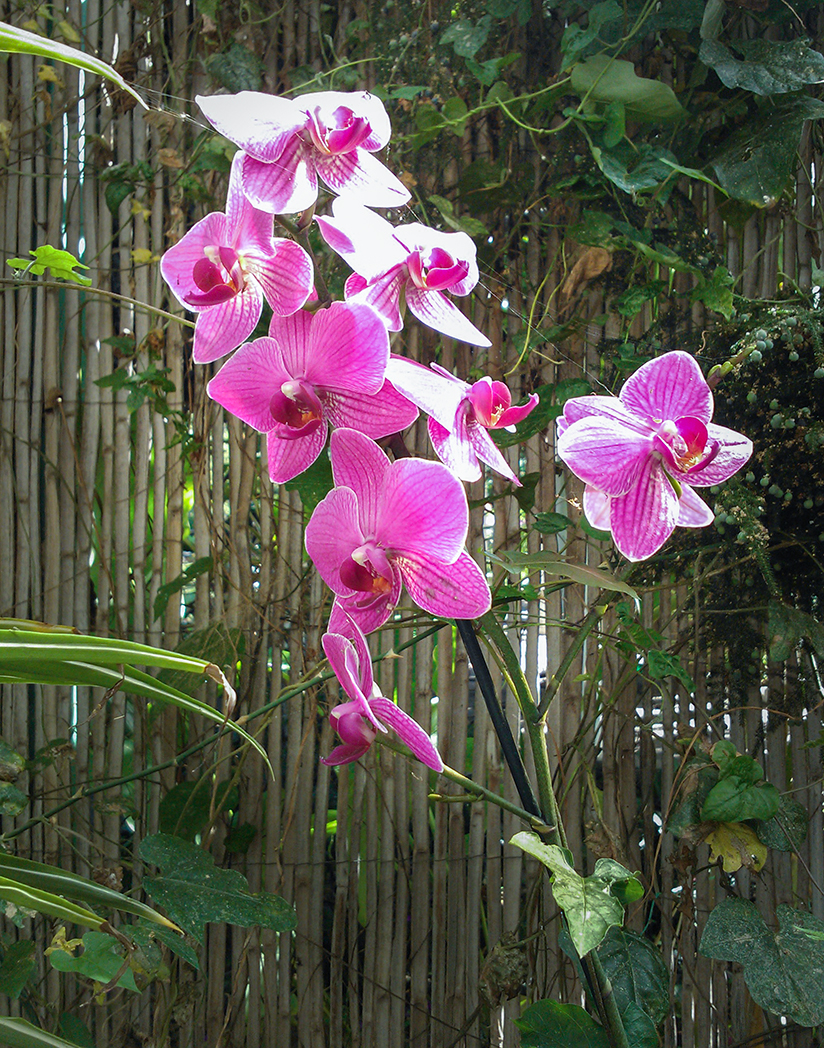 6 Agatha Cristie’s inspiration garden
In the middle of Puerto de la Cruz is the Jardín de Orquideas de Sitio Litre (Orchid Garden), made famous by the English crime writer Agatha Christie.
The author has been sitting here writing part of the short story collection “The Mysterious Mr. Quin”. You can see plenty of signs of the crime writer’s stay in the garden. There is an entire exhibition corner dedicated to the author.
The 235-year-old private garden is the oldest on the island and although it doesn’t have as many orchids as its name might suggest, it is cozy and filled with tropical and subtropical plants and lush corners with fountains, ponds and benches. The orchid garden also has a fine Canarian-style mansion from 1730 that has hosted other prominent guests over the years.
Jardín Sitio Litre, Cam. Sitio Litre 16
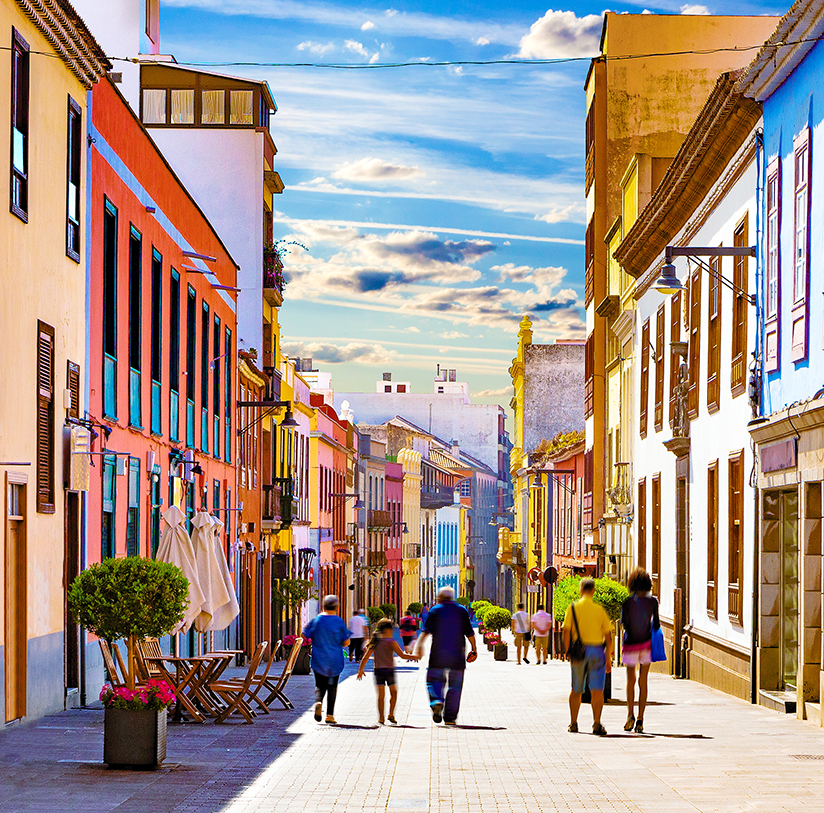
7 Look at architecture in San Cristóbal de La Laguna
Colorful colonial-style houses line the streets of Tenerife’s third largest city, San Cristóbal de La Laguna, a UNESCO World Heritage Site since 1999.
Walking in the city center, with its cozy streets and squares, feels like walking in a time warp. It’s an exciting study in architecture. The old town has retained its 15th-century form and the colonial essence is intact in the city today. San Cristóbal has also inspired several Latin American cities.
Calle San Agustín is one of the center’s most famous streets with Canarian-style houses. Also stop by the beautiful church, Nuestra Señora de la Concepción.
The center of San Cristóbal de La Laguna also has a wealth of shopping opportunities and great tapas bars where you can sample some of Tenerife’s specialties such as Papas Arrugadas (wrinkled potatoes) with mojo sauce, goat cheese and fish.
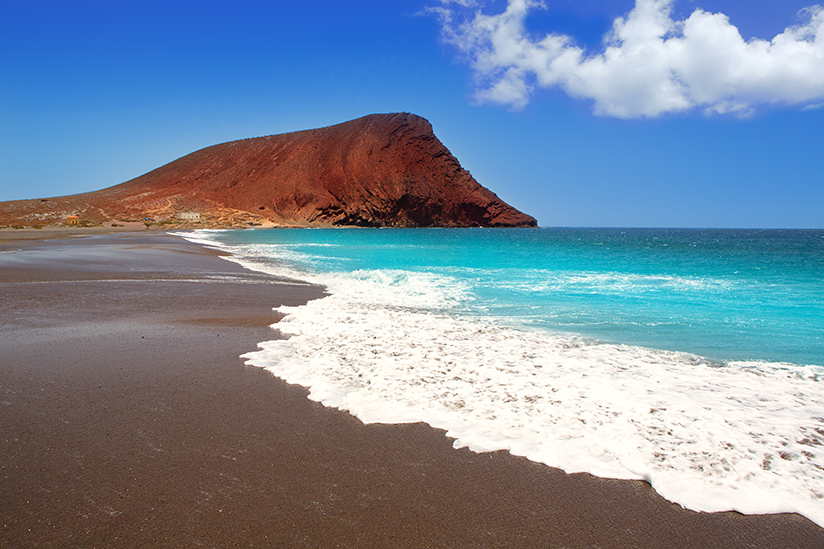
8 Put your feet in black or white sand
Tenerife has over 90 beaches. Many travel to Tenerife for its stunning beaches, and here you can choose to put your feet on white or black lava sand formed by volcanic activity. Whichever beach you choose, you can jump into crystal clear waters all over the island.
From long stretches of golden sandy beaches with low tide and all the facilities you need to surfer-friendly and small natural beaches.
The black volcanic beaches are in the north and the white ones in the south. In the center and to the west are the natural beaches.
Playa de los Gigantes is one of the most popular black beaches. It’s small, with calm and crystal clear waters, and has cliffs that tower high above the beach and the city. You can rent sun loungers here.
Playa de Abama, with its golden sands, is considered by many to be one of Tenerife’s most beautiful beaches. The beach is located in a picturesque cove at Guía de Isora, with luxury hotels within easy reach. From the beach you have views of a banana plantation and the island of La Gomera on the horizon.
Playa La Tejlita is one of Tenerife’s wild beaches. It is located close to El Medano and is popular with surfers. From the beach there are beautiful views of a large cliff.
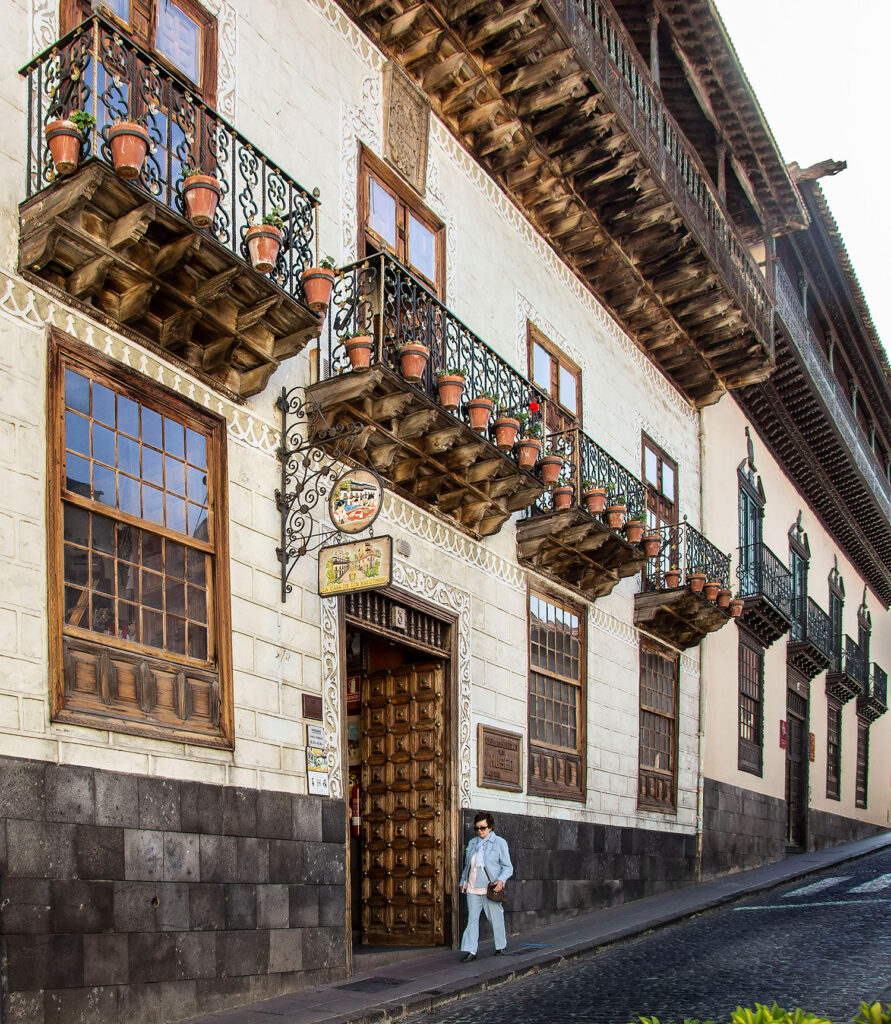
9 La Orotava with house with balconies
Just 7 km from Puerta de la Cruz, you will find one of the Canary Islands’ oldest villages, with charming cobbled streets and traditional Canarian atmosphere and architecture.
In La Orotava you will also find the famous “house with balconies” La Casa de los Balcones , a fine manor house from 1632 with carved wooden balconies.
The old manor houses a museum of crafts around a lush, Canarian courtyard. See local crafts such as ceramics, textiles, basket weaving and wine making and gain insight into how people lived locally in different eras and made crafts 200 years ago.
La Casa de los Balcones, Calle San Francisco 3
 10 Dragon’s Blood Tree in Icod de Los Vinos
Tenerife’s oldest town, Icod de Los Vinos, is located in the north and has historically been an agricultural town that, among other things, grows wine. Today it is a charming small town with fine old Canarian houses.
The city’s main attraction is the ancient dragon’s blood tree that stands in the middle of the park, Parque del Drago, in La Constitución square. The tree is the oldest on the island and is referred to as the thousand year tree, but it is estimated to be 800 years old.
The dragon blood tree in Icod de Los Vinos, with its umbrella-shaped crown, is 18 meters high, has a circumference of 20 meters and a diameter of 6 meters.
The Dragon’s Blood Tree, called Drago Milenario de Icod de Los Vinos among locals, is actually a lily-like plant.
Notice that the trunk of the dragon’s blood tree is not typically woody, but gnarled and root-like. You can calculate the age of the tree by counting branches. It takes approximately 14-25 years for a branch to grow out.
Dragon’s blood trees grow on all the Canary Islands, but the tree has become the symbol of Tenerife. When the bark is cut, the plant secretes a reddish resin, hence the reference to dragon blood. The tree has played an important role in the religious life of the indigenous inhabitants. They used the sap as a healing ointment. Today, the sap is used for cosmetics and medicine as well as dye.
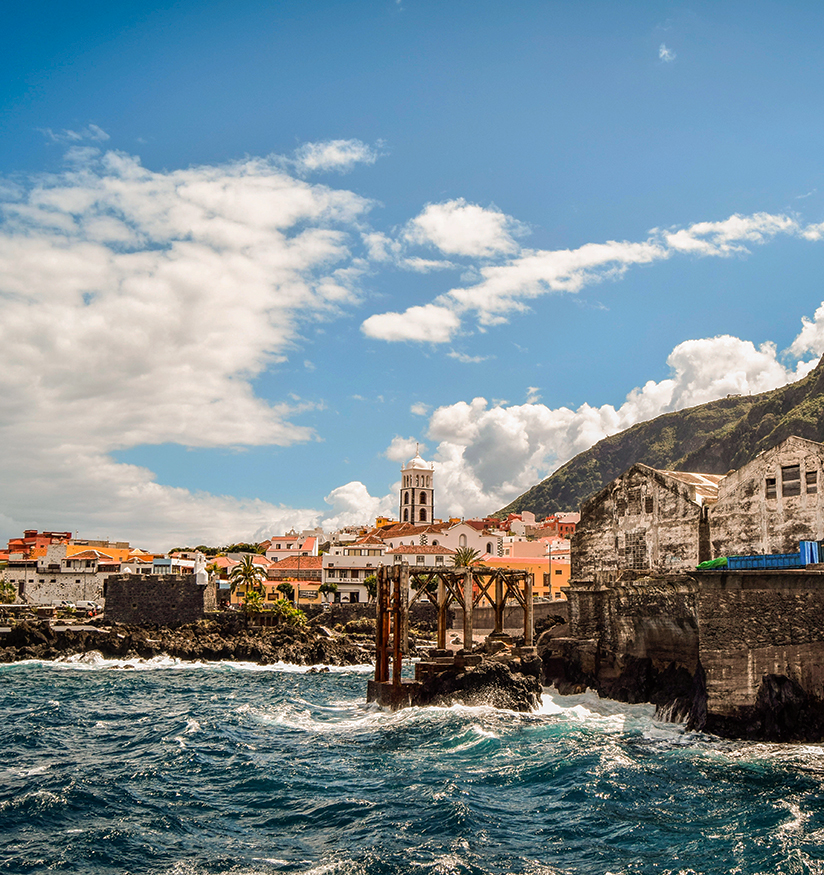
11 The picturesque village of Garachico
Garachico is one of the oldest villages in Tenerife and was once the richest. Located on the north coast of Tenerife, the city was founded in the 11th century by an Italian banker and was for many years the centre of trade between Europe and the Spanish colonies in America.
In 1706, Garachico and the old port were destroyed by a volcanic eruption from Teide. Today, the lava cliffs are a popular place to jump off and have a swim.
Garachico is relatively tourist-free, and you can enjoy views of the natural monument of Garachico Rock Island as well as food or a coffee with beautiful sea views at the restaurant next to the port fortress, Castillo de San Miguel, or take a stroll in the historic centre.
In the city centre, one of the most well preserved and characteristic in Tenerife, you will find fine buildings from the 16th and 17th century as the small church and a museum of religious art.
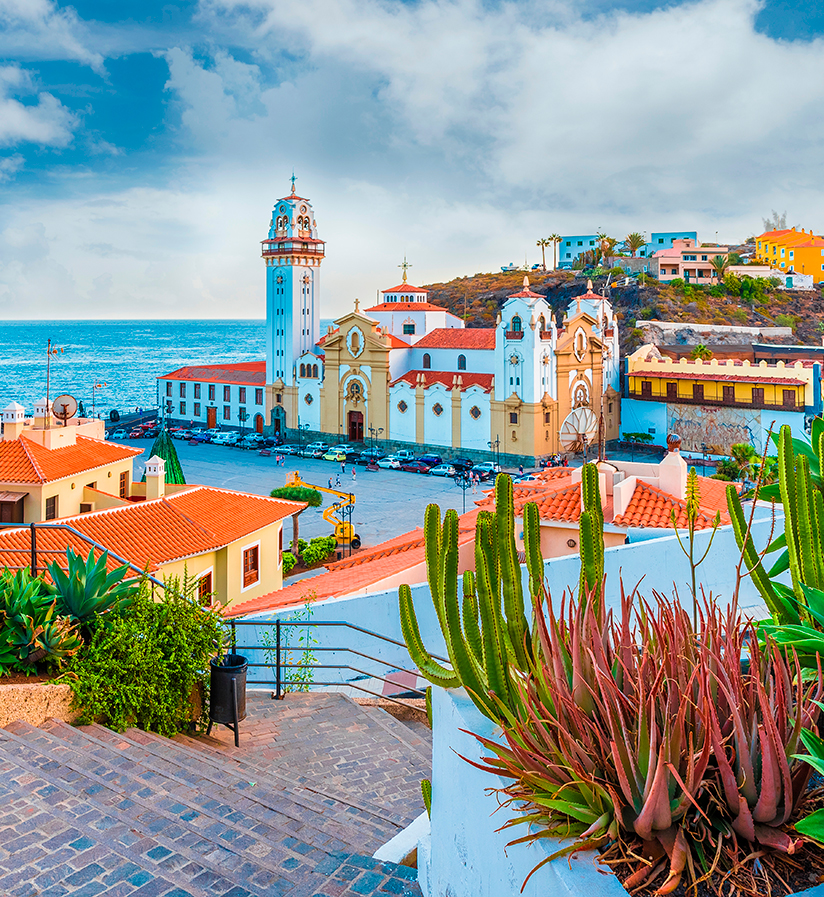
12 Candelaria – city of pilgrims
The beautiful town of Candelaria is located 17 kilometers from Tenerife’s capital, Santa Cruz, and is the most important town for pilgrims in the Canary Islands.
Candelaria has volcanic black beaches that contrast nicely with the city’s green and maritime surroundings.
The Basilica of Nuestra Señora de la Candelaria is the city’s main attraction. In 1390, two Guanche shepherds found a wooden carving of the Virgin Mary in a cave, which they used as shelter during a storm. The original wood carving has been lost, but the basilica is dedicated to the Virgin Mary of Candelaria, the patron saint of the Canary Islands. This makes it an important stop for pilgrims.
The original basilica from 1672 burned down and the current one was built in 1959. It has three naves and a 45 meter high bell tower.
Every year, in February and August, Candeleria hosts two major festivals in honor of Virgo. The August festival is considered to be the locals’ festival. It features large processions and activities that have strong links to the traditions of the indigenous Guanach people.
More travel tips for nature and culture experiences in Spain
If you love vacations that combine nature and culture, read about the beautiful coastal towns of Asturias and the experiences of the Picos de Europa.
In Mallorca you can also combine culture and nature. Read the guide to Palma de Mallorca.
If you like beautiful train journeys, try Catalonia’s most beautiful train journey. Also check out the guide to green experiences in Valencia.