You’ll never be done with Spain’s largest city. There’s always more to see in Madrid. Here’s an introduction to the city’s most iconic sites to inspire you on your first visit to Madrid.
The guide to Madrid is updated in March 2026, it was originally published in May 2024.
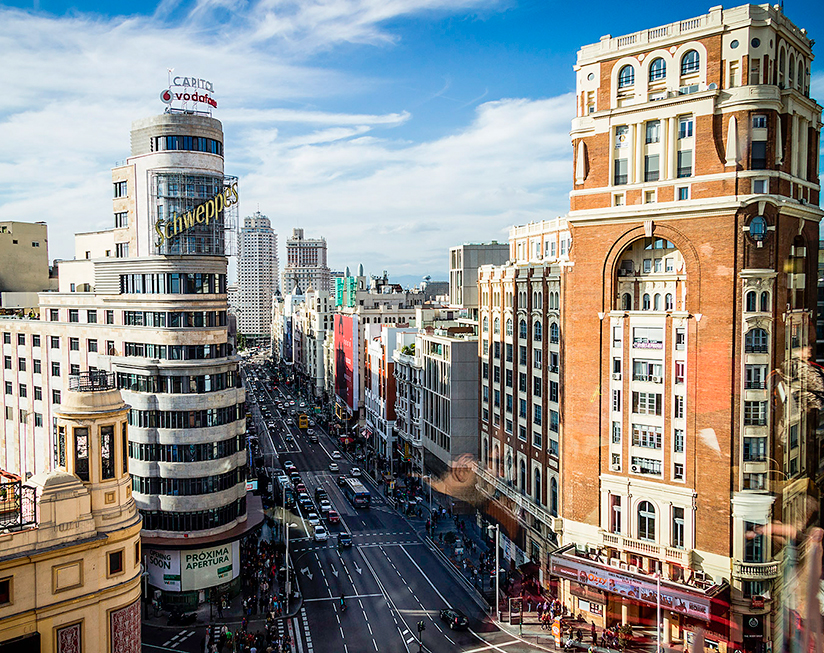 Walk down Gran Vía
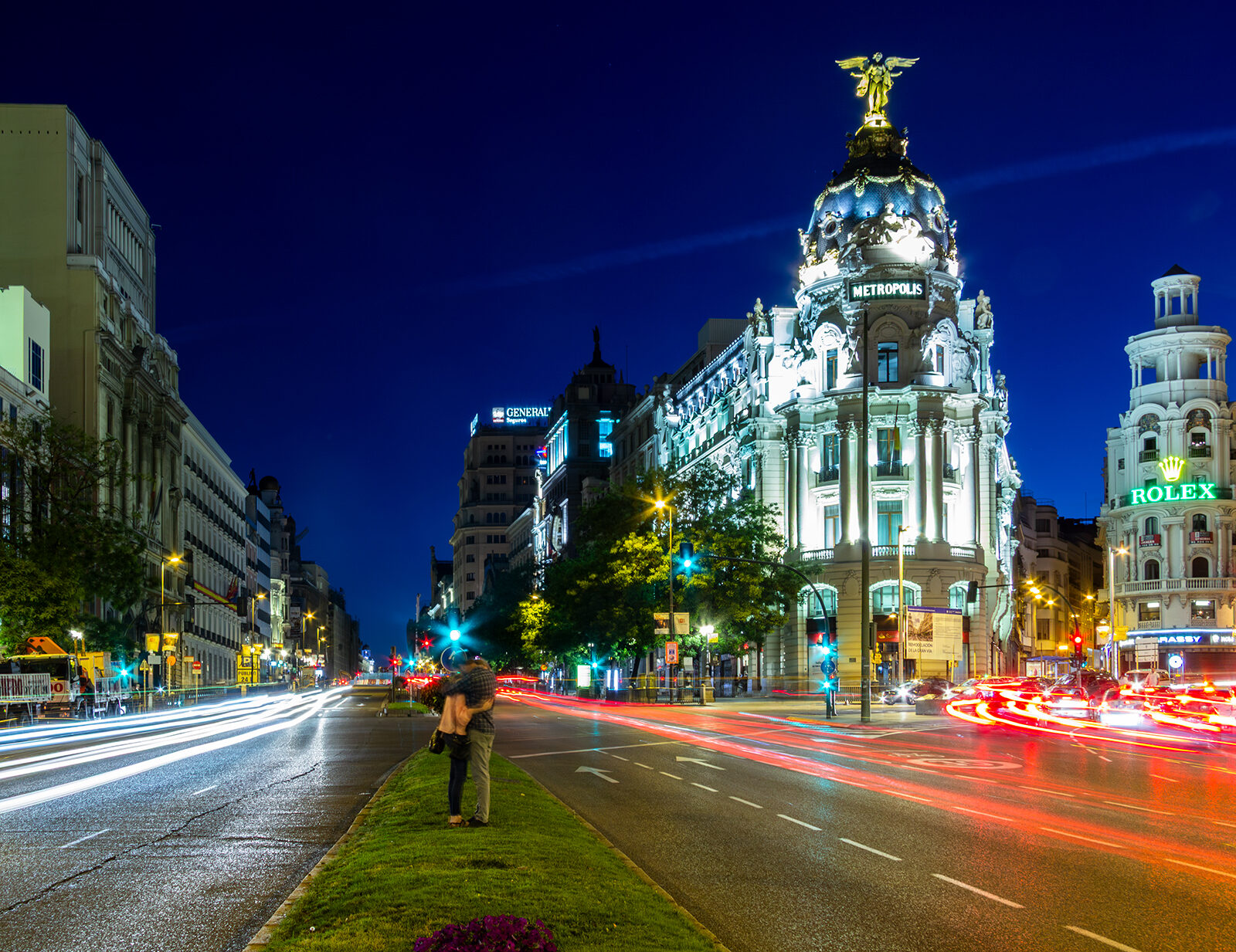
Madrid’s main artery Gran Vía is the city’s answer to Broadway and is packed with impressive buildings.
Gran Vía runs from the famous Metrópolis building, with a bronze statue of Victoria the Victorious on the dome, on Calle de Alcalá to Plaza de España.
The major, famous architectural works along Gran Vía date from the early 20th century and include the impressive Telefónica building, several cinemas such as the Capitol, Palacio de la Prensa and Callao, the Lope de Vega and Compac theatres and hotels such as the Hotel de las Letras.
At the end, at Plaza de España, you’ll find the iconic Torre de Madrid, which until the 1980s was Madrid’s tallest building. There is also a statue of the famous writer Miguel de Cervantes.
The 117 meter high Edificio España houses the Hotel Riu Plaza España, which has a popular rooftop terrace with a bar and 360-degree views.
 Madrid’s golden art triangle
Madrid’s world-famous art museums are a must if you love art. Madrid’s art triangle consists of the three museums Prado, Reina Sofia and Thyssen-Bornemisza.
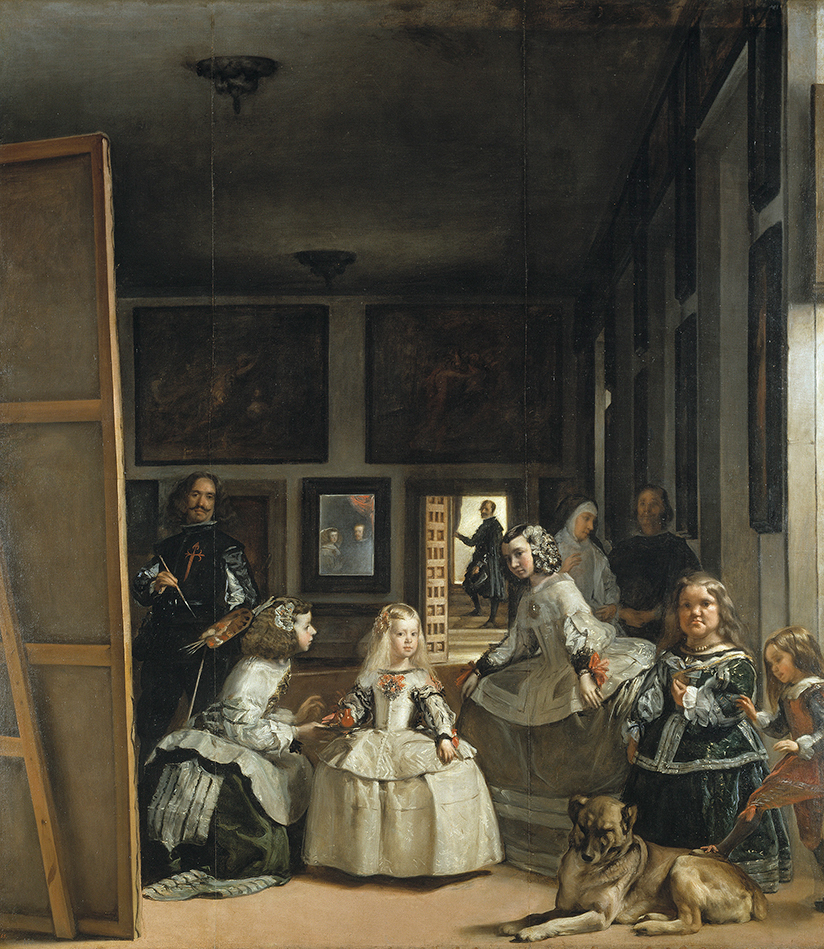
The largest, Museo del Prado, offers an impressive and important collection of mainly Spanish but also European paintings from the 12th to the 20th century. Key works include Diego Velázquez’s Las Meninas (The Court Ladies), Francisco Goya’s El dos de mayo (The May 2) and (on May 3) and El Greco’s La Trinidad (The Trinity).
Skip the very long line and buy your Prado Museum ticket in advance (promotional link).
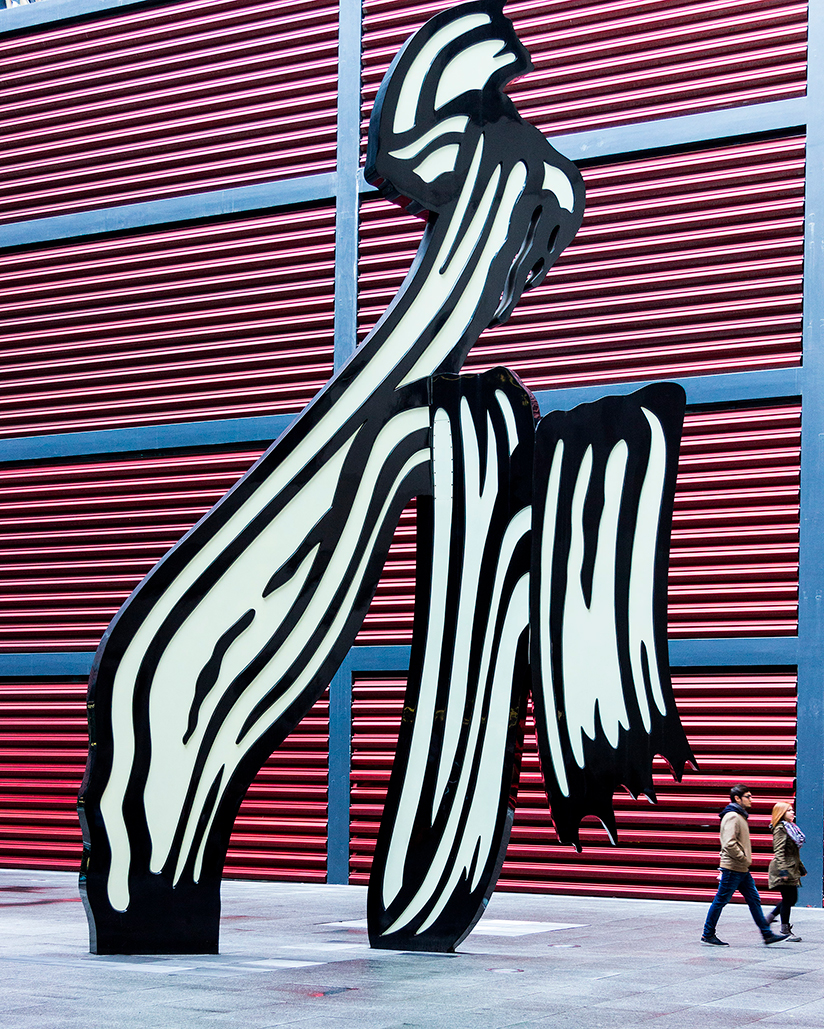 At Reina Sofia, you can explore Spain’s largest collection of modern art from the 20th century – not least the world’s most famous painting – Guernica by Pablo Picasso. Besides Picasso, the collection consists mainly of other Spanish artists such as Salvador Dalí and Joan Miró.
Buy tickets to Reina Sofia in advance (promotional link)
Thyssen-Bornemisza is a private family collection of over 1200 works owned by the Spanish state. The collection represents European and American art from the 13th to the 20th century. They are exhibited in up to 1000 pieces at a time. The museum also has regular guest exhibitions. In 2026, the museum has a large exhibition of the famous Danish painter Hammershøi. Read more about the Hammershøi exhibition.
Buy tickets for Thyssen-Birnemisza in advance (promotional link)
Powered by GetYourGuide
Madrid’s iconic squares
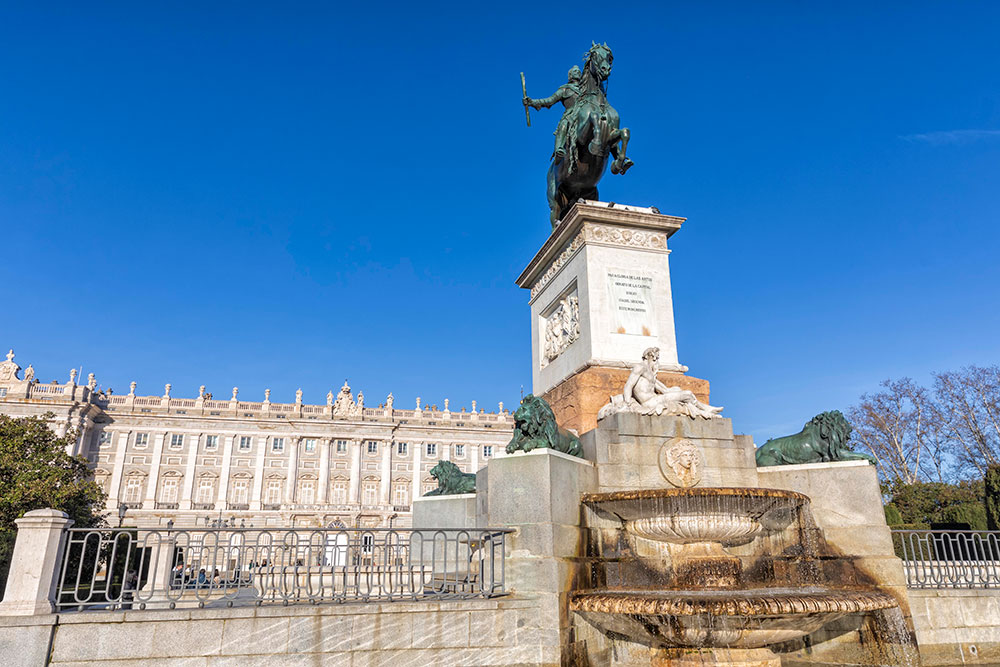
Plaza de Oriente with the Royal Palace
From Plaza de España you can walk to the ornate Plaza de Oriente, with a bronze statue of Felipe IV on horseback. At the end is the white royal palace, Palacio de Real, with the city’s Almudena Cathedral right next to it.
The royal castle, which is not inhabited by the royal family, can be visited. Here you get a guided tour through the 50 rooms, including Goya works, watches, pharmacies and Stradivarius violins.
Buy a ticket for Palacio Real (promotional link).
If you’re not royalty, stay outside and enjoy the beautiful views from Plaza de la Armería. Next to the Royal Palace is the new Royal Art Gallery, G alería de las Colecciones Reales, which opened in 2023. Works from all the royal palaces’ art collections are exhibited here.
Buy a ticket for Galeríade las Colecciones Reales (promotional link)
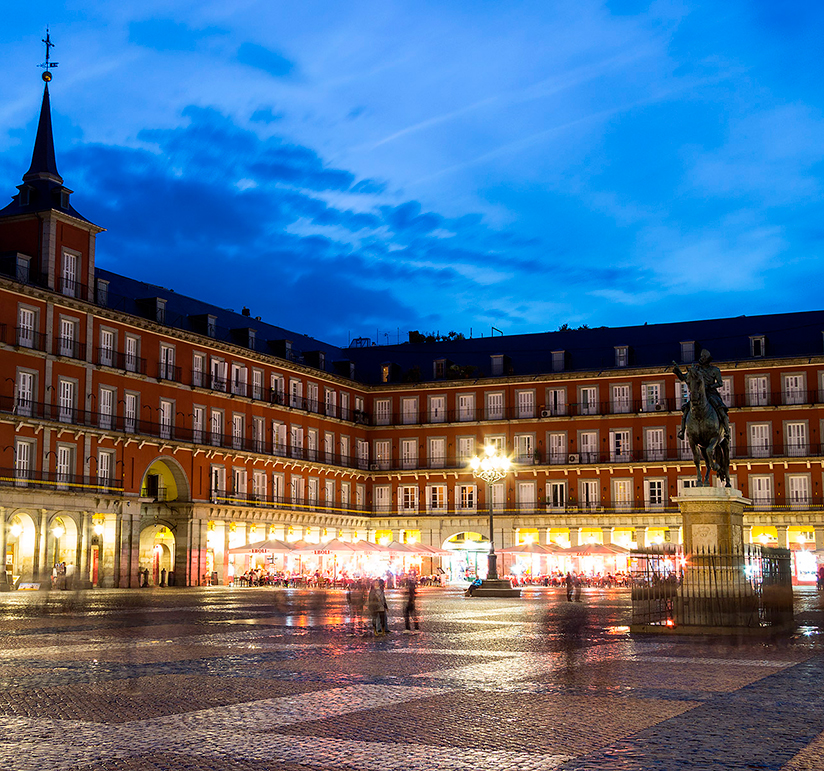 Plaza Mayor
Amusements, tourists and locals gather in Madrid’s main square, Plaza Mayor, which has in the past played host to royal coronations, executions and bullfights.
Sit under one of the cosy vaults of one of the many bars and restaurants and sip a coffee while you study the folklore. Skip the food. Prices are high and the food tastes better in many other places.
In the middle of the square stands a statue of Felipe III, who built the Plaza Mayor during his reign (1598-1621). Here you will also find the city’s main tourist information.
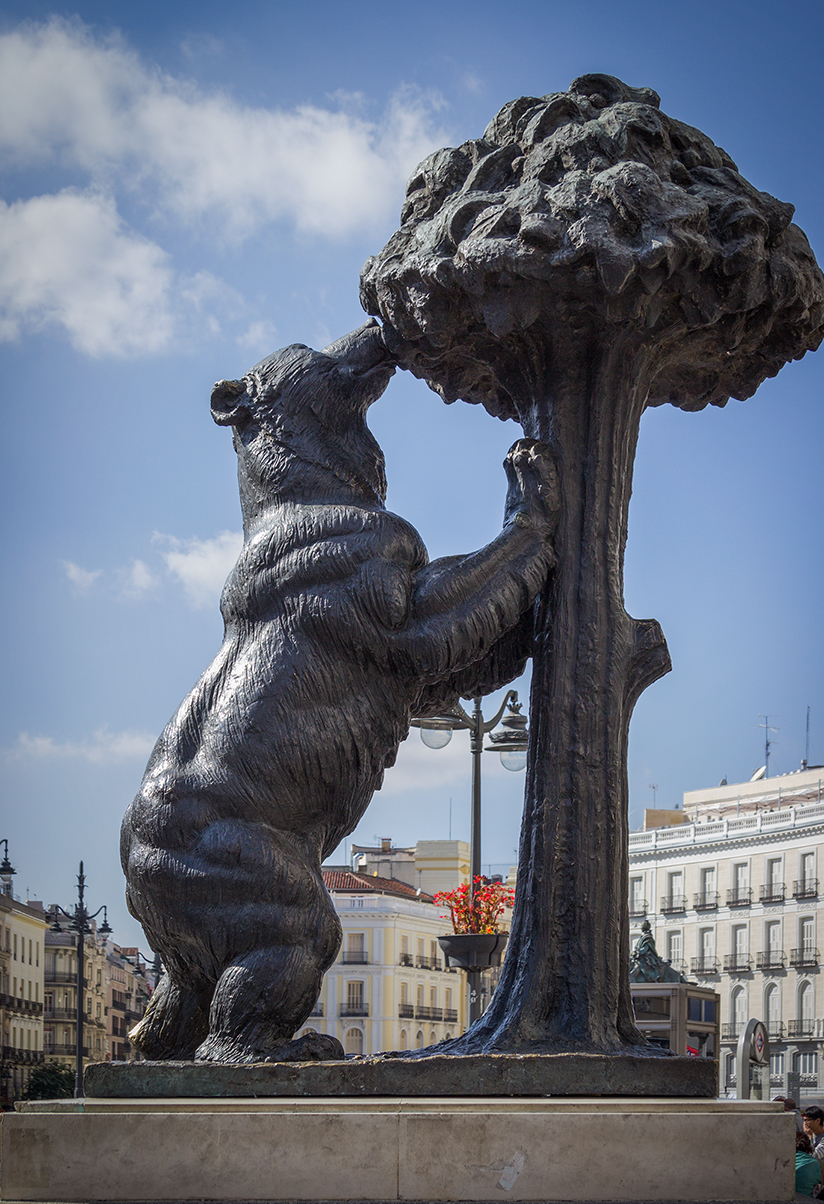 Puerta del Sol
From Plaza Mayor, you can walk along Calle Mayor, with its fine historic shops, to Madrid’s hub, Puerta del Sol.
Puerta del Sol is Madrid’s busiest square and always good for a demonstration. On the pavement by the government building, Casa de Correos, with the bell tower by which the locals toast in the New Year, you’ll find the Zero Kilometre Stone, which is the starting point for the Spanish roads.
Most famous is the statue, El Oso y El Madroño (The Bear and the Strawberry Tree), which has become Madrid’s landmark and the world’s most photographed bear. Here, tourists queue up to get a selfie for Instagram.
If you’re a keen shopper, the square is surrounded by side streets with plenty of shops.
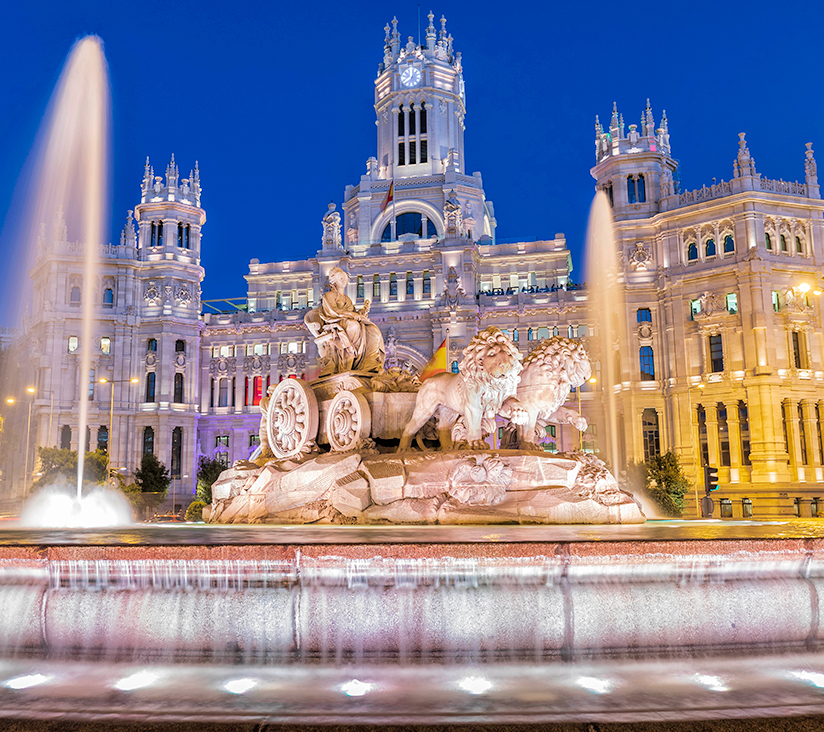
Plaza de Cibeles
Plaza de Cibeles is the most symbolic square and a famous landmark in Madrid. The centre of the square is the fountain, Fuente de Cibeles, around which Real Madrid fans celebrate the team’s victories.
In the middle of the fountain, the Roman fertility goddess Cibeles (Kybele) sits on a chariot pulled by lions. She has been here since 1782.
The square is surrounded by large buildings such as the Casa de América (centre for Latin American culture), the Banco de España (Spanish bank) and the Palacio de las Comunicaciones, which houses the city hall and the Centro Centro cultural centre and was formerly the main post office.
At the top of the building you get a great view of the city and there are always interesting exhibitions.
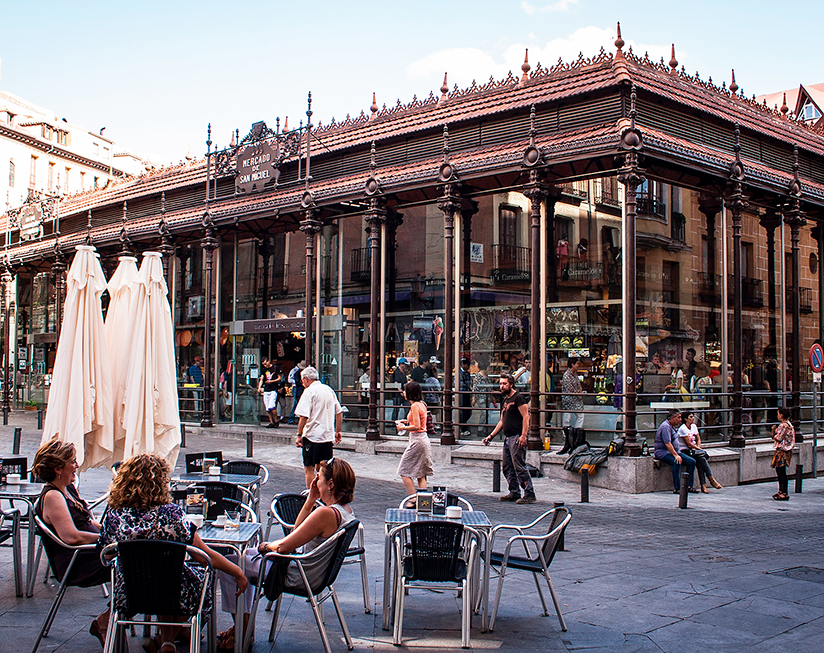
Eat at Madrid’s famous gastro market
Madrid has several food markets with quality products. The most famous is the Mercado San Miguel, whose architecture alone makes it worth a visit. The building dates from the beginning of the 20th century. Located in the oldest part of the city, it is unique because it is built on a metal structure.
The facade is still original, but inside everything has been modernised. San Miguel is a mix of market and gastrotek. Sit at one of the long tables and enjoy some tapas – from savoury to sweet – and a glass of sherry, cava or wine. The prices are not the lowest in town, but the quality is top notch.
 Madrid’s green lung
Runners, dog walkers, kissing lovers and picnicking families criss-cross the city’s central park, El Retiro. The 125-hectare park is a wonderful green oasis worth discovering in Madrid.
There are over 15,000 trees along the many paths, playgrounds, puppet theater, the beautiful, fragrant rose garden, La Rosaleda, and famous monuments like the Fallen Angel. If you’re vacationing in Madrid in May or June, check out Retiro’s rose garden, Rosaleda. Over 4000 roses are in bloom here.
You can also hop in a dinghy and sail on the artificial lake in front of the monument to Alfonso XII, and drop by the beautiful Palacio de Cristal glass pavilion, one of Spain’s finest examples of iron architecture.
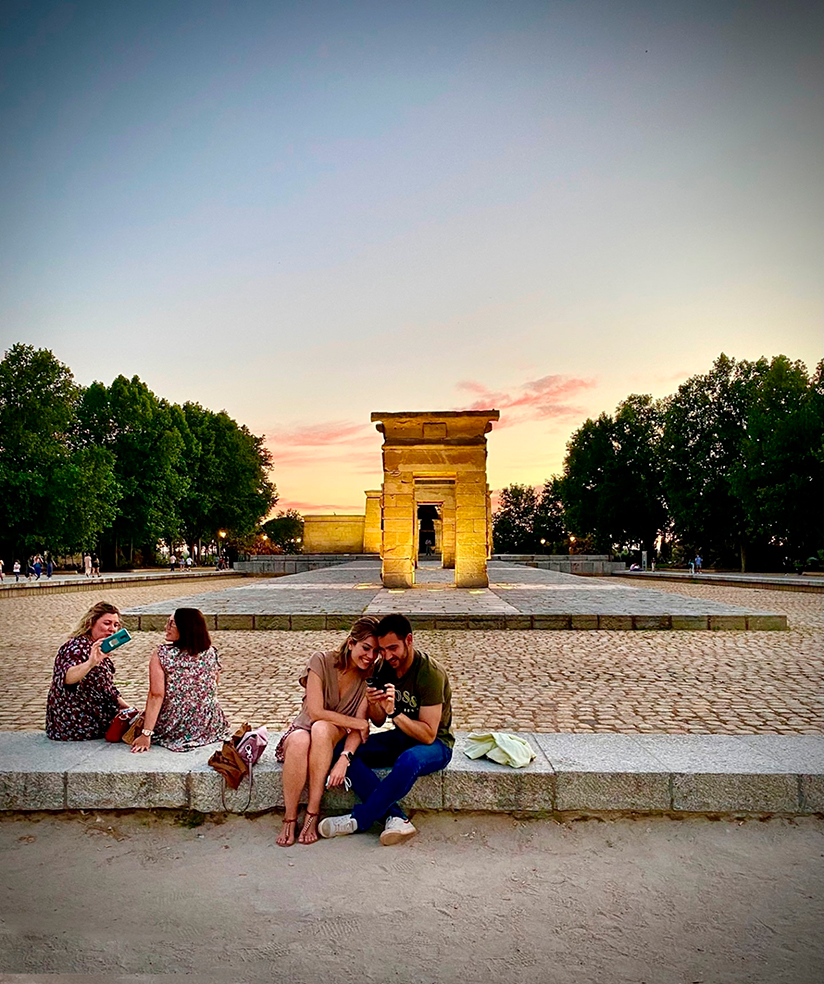
Sunset at the Egyptian temple
In the Parque del Oste, the Templo de Debod (Temple of Debod) is located on an elevated site overlooking the park and the monuments of Plaza de España. The Egyptian temple was saved when water rose in Lake Nasser in Egypt during the construction of the Aswan Dam.
Spanish archaeologists took part in the rescue, and in 1968 Spain received the temple as a gift, and it was moved and rebuilt in Madrid. Bring a picnic basket and stay for the sunset, which shows its best orange side here.
Go on a tapas crawl
You don’t have to walk far in Madrid before you run into a tapas bar, and the locals love to tapar before dinner. In the neighbourhood of La Latina, close to Plaza Mayor, you will find the largest concentration in the area, called the tapas maze.
The area is charming with narrow streets and small colourful squares. In the area’s central street, Calle Cava Baja, you can zigzag from bar to bar, eating and drinking until you’re blue in the face. Although the street appears in every guide to Madrid, there are also many locals among the tourists.
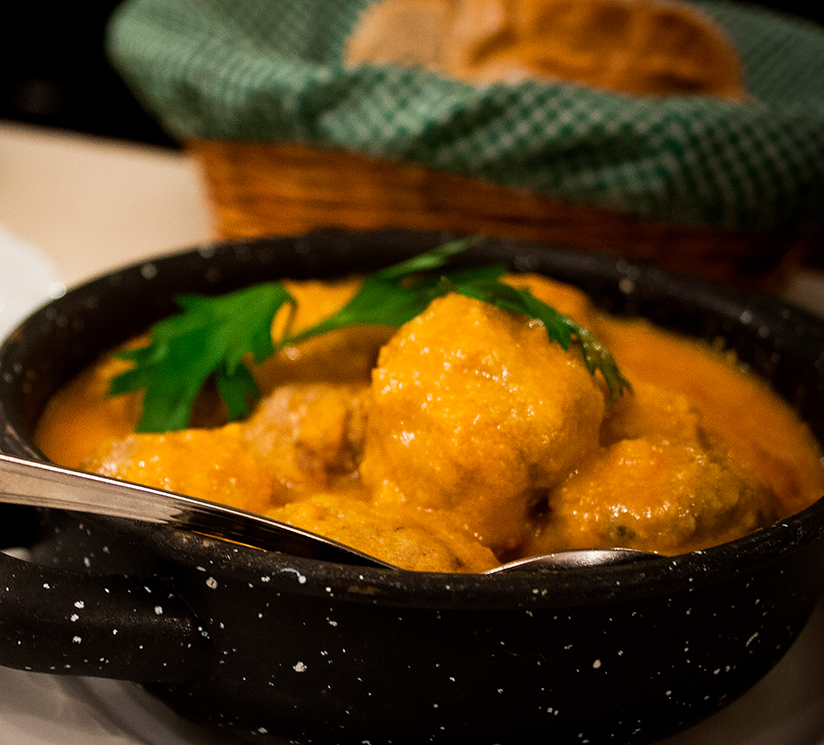
Stop by La Perejila at number 25. Behind the garish green facade hides a cave, filled with Martian finds and allotment garden atmosphere. The waiters are top notch and you get really good tapas. Try their Albondigas (meatballs) and mussels. Also visit the El Tempranillo wine bar at No 38, which has the best selection of local wines and great tapas, including black-footed ham.
Sip drinks on top of Madrid
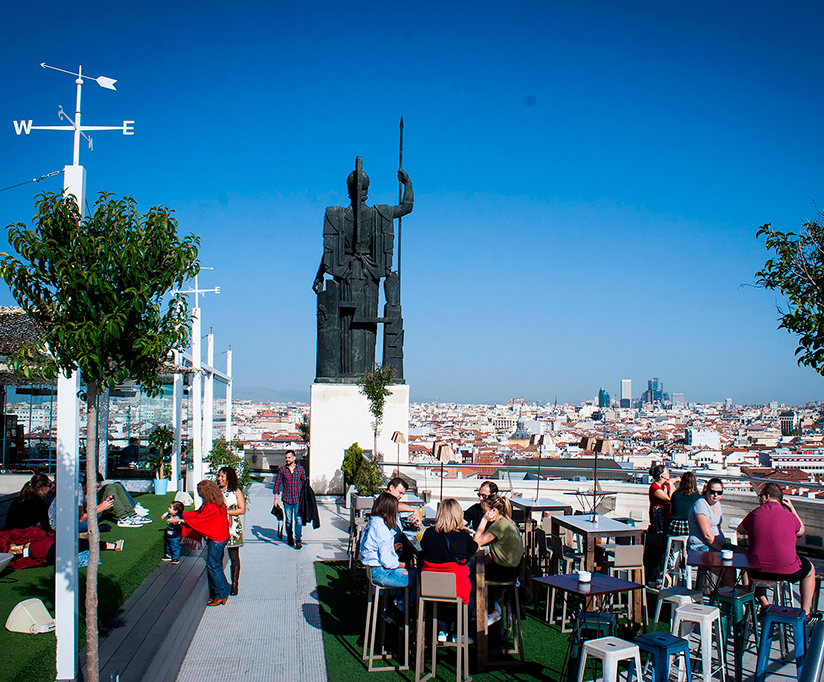
The Circulo de la Bellas Artes Cultural Center offers a cornucopia of film and theater performances, concerts, lectures and art exhibitions – and to top it off, a rooftop terrace with spectacular views. Azotea Circulo de la Bellas Artes is therefore also a popular place to hang out over morning coffee and drinks and concerts in the evening.
Enjoy Madrid’s unforgettable skies, which have inspired countless artists, and views of monumental buildings and the surrounding neighbourhoods. Sip a drink at a café table or lounge in one of the lounge areas and soak up the atmosphere. It costs 5.5 euros to access the roof terrace.
Make a flea market find
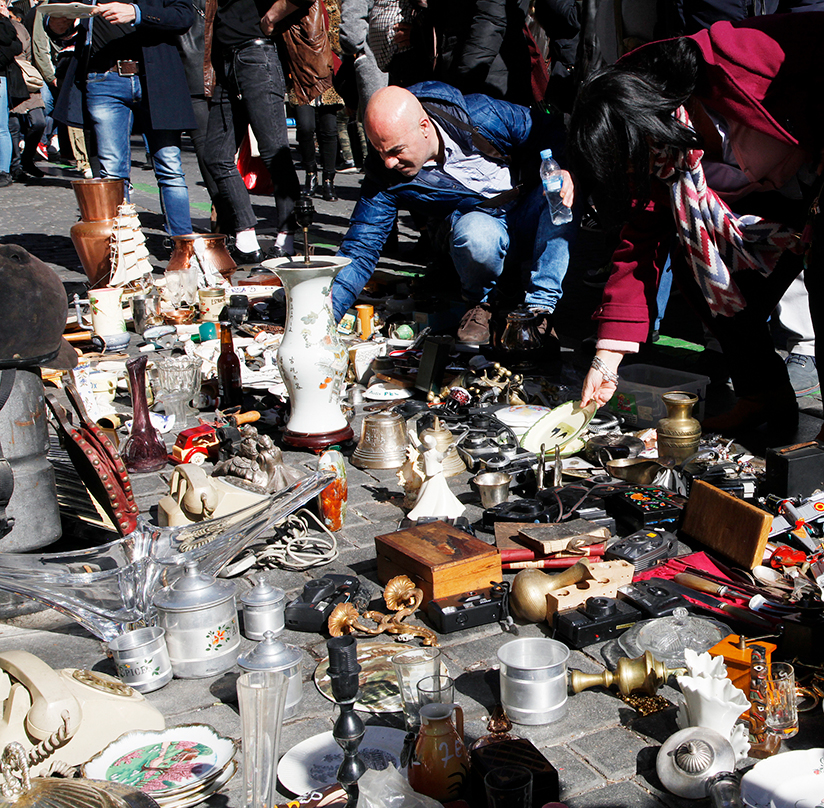
Open every Sunday and public holiday all year round, El Rasto is located along Plaza de Cascorro and the main street Ribera de Curtidores to Ronda de Toledo, and is Madrid’s largest and most popular outdoor market.
Although the flea market is mentioned in every travel guidebook, including this guide to Madrid, the experience is greater than the supply of actual flea market finds. There are more new items (especially clothes, jewelry and bags) than second-hand, in addition to some toys. But if you explore the side streets, there’s a treasure trove of interesting antique shops and hawkers open for business.
Here you can find everything a flea heart could desire – and also soak up the lively and local folk atmosphere.
 Dip churros in chocolate at San Ginés
The white-clad waiters stylishly swing metal trays with layered cups of rich, intense liquid chocolate and plates of churros (deep-fried dough tubes) around the crowded tables. San Ginés serves the best chocolate con churros in town. And they have been doing so in a cosy little corner since 1894.
Although the sweets are traditionally eaten for breakfast, you can drop by whenever you like. The café is open 24 hours a day. Remember to drink the chocolate that your churros haven’t soaked up. You can buy the house chocolates and other sweets to take home in the shop next to the café.
 Join the football party
If you’re a football fan, Madrid doesn’t disappoint. Football is an important part of local life, with most people being members of one of the city’s two big clubs, Real Madrid and Atlético Madrid.
If you’re early, you can secure a ticket for a match at Real Madrid’s home stadium, Santiago Bernabeu or Atlético’s Wanda Metropolitano.
At both stadiums you can go on various tours.
If you’re not going to watch football in Madrid, you can still join the party. There are plenty of football bars and small bars in Madrid that show matches on the big screen.
If one of the clubs wins a match, you can participate in the fans’ after party.
Real Madrid fans celebrate around the fountain in Plaza de Cibeles. This is also where players gather when they win big tournaments.
Atleticó fans celebrate victories around the Neptuno fountain in Plaza de Cánovas del Castillo.
Also visit Madrid’s impressive football museum, Legends: The Home of Football, at Puerta del Sol. The seven-story museum takes you on a virtual journey through the history of football. You can also see original football jerseys and boots, among other things. Buy a ticket to Legends: The Home of Football (promotional link)
Powered by GetYourGuide
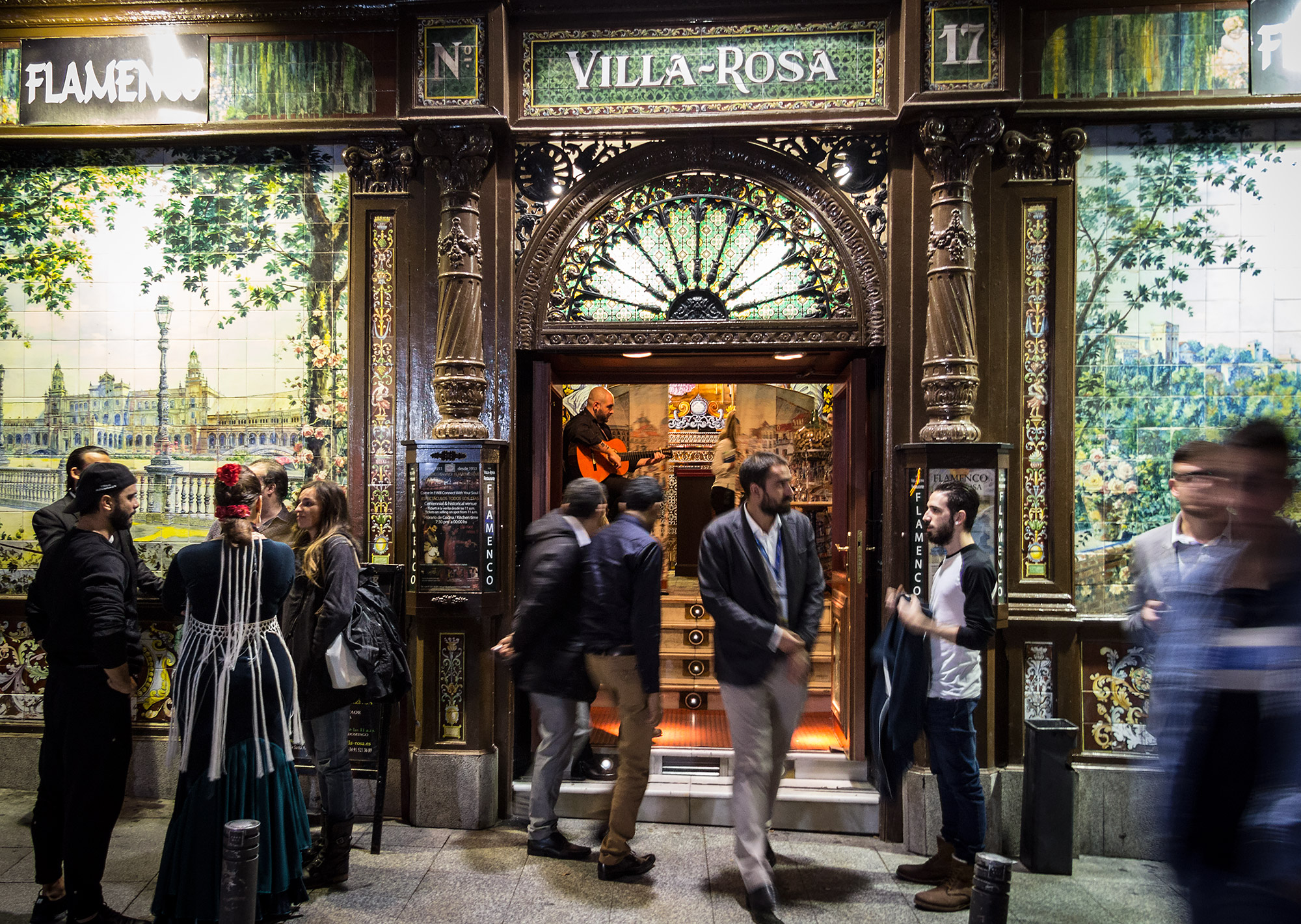
A passionate flamenco concert
Despite Andalusia being the cradle of flamenco, there is plenty of star class flamenco in Madrid. Most famous flamenco dancers have passed through Madrid before hitting the world’s big stages. Also the award-winning Danish/Spanish flamenco dancer, Selene Muñoz, who has lived and worked in the city for many years.
The Corona restrictions, with long closures in the city, have unfortunately meant that some of the most renowned flamenco venues have had to turn their backs. These include the legendary Casa Patas in the Lavapiés district and the city’s oldest tablao from 1911, Villa-Rosa, which was especially loved by tourists. Still, stop by Vila-Rosa to see the historic and impressive facade still intact. You will find it at Plaza Santa Ana 9.
Luckily, Madrid still has plenty of small, interesting places where you can spend the evening in the company of rhythmic haymakers, passionate flamenco singing and seductive Spanish guitars in a boiling atmosphere.
If you go to Cardamomo in Madrid’s Huerta neighborhood, you’re guaranteed an evening of young talent. The famous flamenco dancer Joaquin Cortes and the late singer Enrique Morente performed here before they became world famous. Book tickets in advance as it’s always packed.
 Paseo de la Castellana – from top to bottom
On the Paseo de la Castellana running through the city from north to south along Paseo del Prado and Paseo de Recoletos, you’ll find Madrid’s financial center, plenty of exclusive hotels and shops and the famous Santiago Bernabéu stadium.
Interesting attractions along this endless avenue are also Plaza Castilla with the huge obelisk in front of the leaning office towers, KIO Torres, also called Puerta de Europa (Gateway to Europe). At the northern end you’ll find the famous financial complex with the four skyscrapers, Las Cuatro Torres. The tallest tower, Torre de Cristal , at 249 metres, is Spain’s tallest.
Not many tourists take the Paseo Castellana, but I think it’s worth a visit if you have the time.
Map for the guide to Madrid
Transportation in Madrid
Metro
You can walk to most things in the center of Madrid. You’ll always have a metro station nearby if you’re going to the outskirts of the city center or for a longer trip. You buy metro tickets from the vending machine at the station. It costs €1.5 and is valid for five stations. If you’re going further, you can buy additional zones.
You can also buy a metro card (plastic card) from the machine, which you can then refill. The card costs 2.5 euros.
Buses
In Madrid, city buses run to every corner. However, I prefer the metro as they are very slow in traffic. The metro card can also be used on the city buses if it is topped up. Alternatively, you can buy a ticket on the bus.
Airport bus
An airport bus runs between Barajas and the city center every day of the year. The bus stops at Plaza de Cibeles and the main train station Atocha. The trip takes approximately 30 minutes. You can buy a ticket on the bus.
Taxi
It’s easy to get a taxi in Madrid, both in the city center and at the airport. From the airport to the city center there is a fixed price of 33 eur.
Bike
You have several options for bike rental. You typically pay for rental by the hour.
Tips for more things to do in Madrid
- For more tips on experiences in Madrid, read the guide to alternative art experiences in Madrid and this guide to different experiences in Madrid.
For more green experiences, read the guide to sustainable experiences in Madrid. - Where to eat and drink in Madrid? Get inspired by my guides to great restaurants, tapas bars and cafes in Madrid. Also check out the sustainable restaurant MO de Movimiento, housed in a former theater.
- Find my hotel recommendations in the guide to hotels in Madrid city center
- If you dream of watching a football match, check out the opportunities to see Real Madrid play on a football trip.